

Les Elegides 2025

December 2025 — It has already been more than a month since we brought the 2nd International Meeting of Elected Women to a close. On 6 and 7 November 2025, Palma hosted this space for convergence, which this year set out to go one step further than the debate on women’s access to local power. At the heart of the meeting was a different question—less explored, but no less urgent: what happens when women get there? And above all: how can leadership be sustained so that women’s presence in office is not fleeting or merely anecdotal?
For two days, the Assembly Hall of the Chamber of Commerce and the surrounding rooms (including the foyer) became a meeting point for mayors, councillors, provincial representatives and researchers from the Global North and the Global South. This geopolitical diversity supported a shared diagnosis: resistance is global, but so are the strategies women use to challenge it.
Les Elegides aimed to strengthen women’s political leadership; make visible the resistance that still keeps them in a fragile balance; highlight their role in public innovation; and consolidate a network that can sustain them beyond the event.

The afternoon began after a full day outside the official programme, during which elected women from around the world started building connections and getting to know the city and the places hosting the meeting. A visit to the Royal Palace and a welcome activity with many of the speakers who would take part in the sessions marked the start of the gathering itself.
The session opened with institutional remarks and a shared feeling: this meeting was more necessary than ever. A full room signalled that the debate would move forward with intensity and frankness. The Vice President of the Consell de Mallorca and Minister for Culture and Heritage, Antònia Roca Bellifante, opened the event; she was followed by Miriam Ciscar Blat, Deputy Director for Feminist Cooperation, Human, Economic Development and Governance at AECID; and the first welcome was closed by the President of the Fons Mallorquí de Cooperació, Llorenç Perelló Rosselló, who introduced the keynote address.
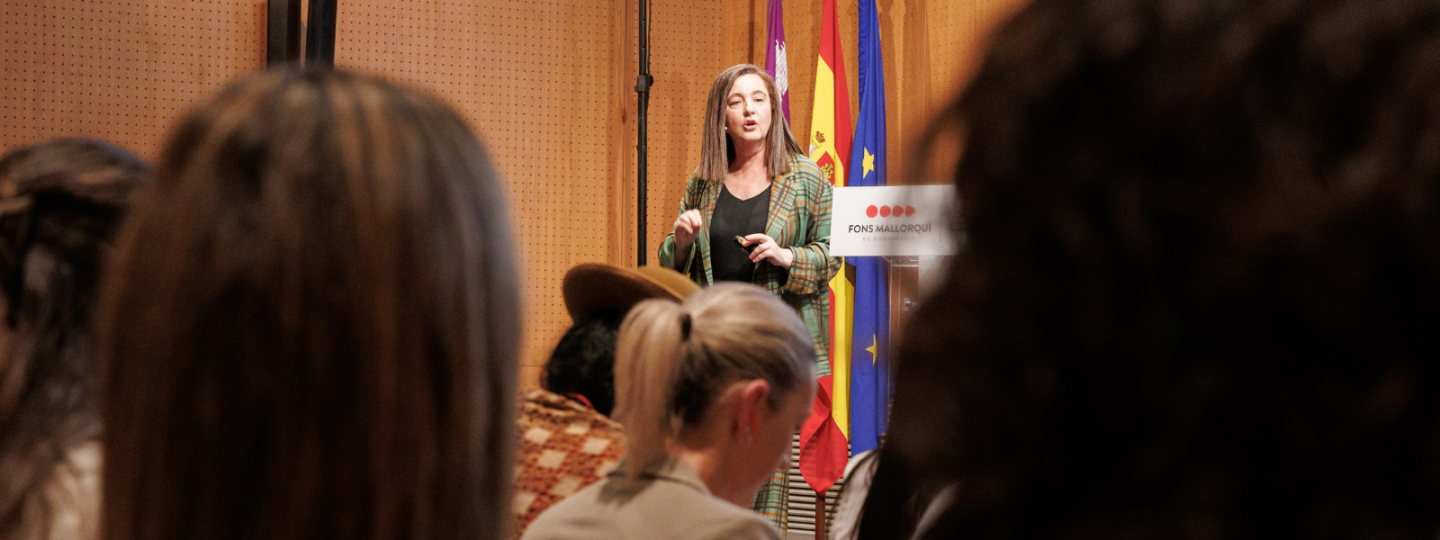
With her incisive approach, Núria Varela, an expert in public equality policies, put words to what many in the room had experienced first-hand. Drawing on authors such as Mary Beard, Gerda Lerner and Hannah Arendt, the keynote showed that discrimination against women is not a remnant of the past, but a mechanism that is constantly reconfigured.
Through the projected material—featuring concepts such as “patriarchies of consent”, “glass cliffs” and “new misogyny”—Varela made clear that formal equality does not automatically translate into authority or legitimacy. In fact, as the analysis presented on the slides argued, symbolic injustice continues to operate persistently: women’s leadership is questioned, undermined or distorted through double standards, silences or disproportionate scrutiny.
The keynote also introduced the hidden costs of women’s leadership, which Varela systematises into three categories—direct, indirect and intangible—ranging from the pressure of constant upskilling to the “emotional labour” that comes from repeatedly having to prove one’s worth and navigate the gender backlash.
And yet, after laying out the challenges and the road still ahead, Varela left the audience with a final, bright and insistent idea—a reminder for everyone: patriarchy is not invincible, as the slide quoting Cynthia Enloe stated plainly.

After the keynote, the first panel of the meeting began, bringing together Antònia Roca Bellifante, Mary Hanna Hourigan (Ireland), Modesta Yauri (Peru) and Déde Akpedje Messan (Togo).
The conversation was lively, honest and full of shared ground. The four speakers addressed the political loneliness that still accompanies many elected women, the need to develop tools and strategies for staying in office, and the importance of strengthening organisations of elected women that can generate real political influence.
It was a panel that set the tone for the meeting: speaking about what we have lived so far and about common challenges—always with a commitment to transformation. The goal was crystal clear: beyond entering politics, we want permanence.
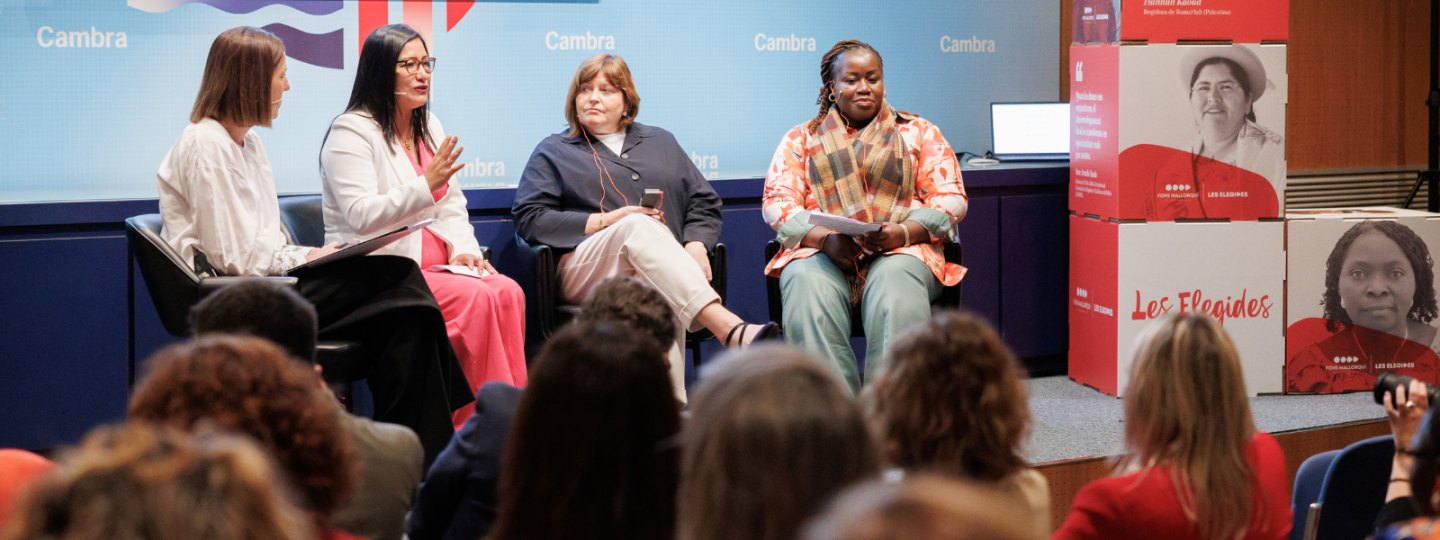
The second day began with a more technical, action-oriented atmosphere. Despite the ambitious agenda, participants resumed their work with the awareness that shared tools had to become concrete strategies for their municipalities. Before anything else, actress Núria Sbert offered a performance linked to the meeting’s central theme, with text and dramaturgy by Aina de Cos.
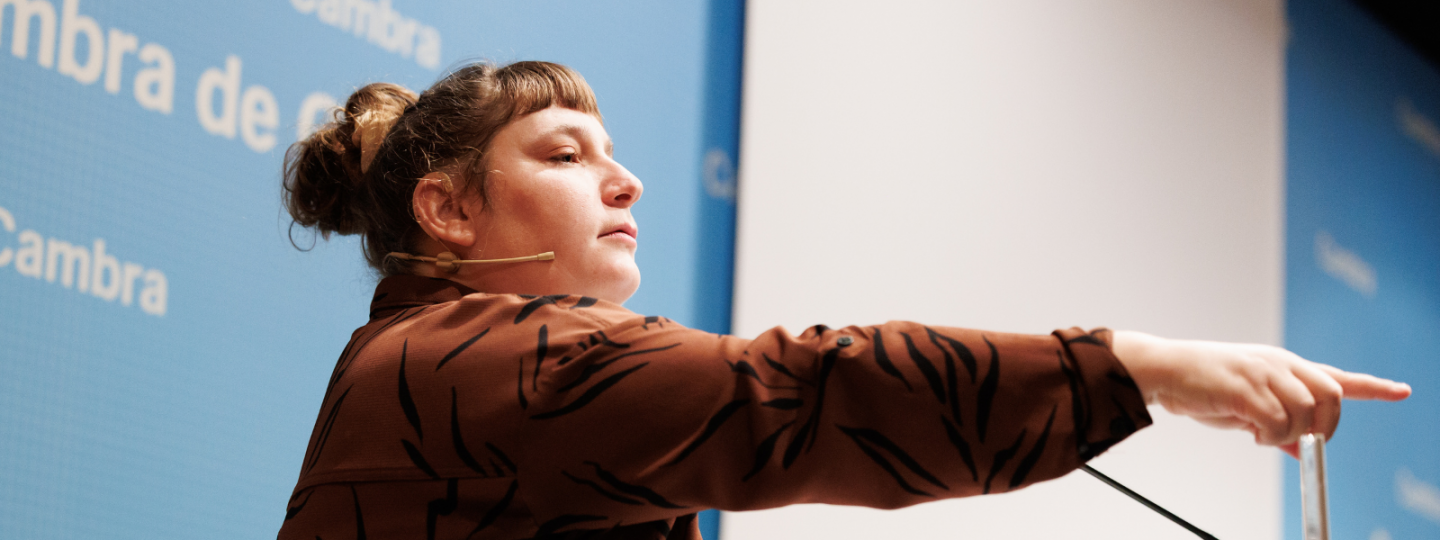
In the first joint keynote, Mayor Leonor Bosch Pérez chaired the session and introduced the speakers: Sílvia Soriano, a constitutional law researcher at the University of Extremadura, and Dr Laura Albaine, a researcher and expert in gender politics at CONICET – University of Buenos Aires. This framed the debate in a more theoretical and comparative key between territories in the Global North and the Global South.
The speakers showed that, despite legislative progress, democracy still carries deeply masculinised structures. They warned about a global rollback in women’s rights and representation and stressed the need to guarantee not only quotas, but effective conditions to exercise power. One sentence captured the talk: “Parity matters; permanence is essential.”
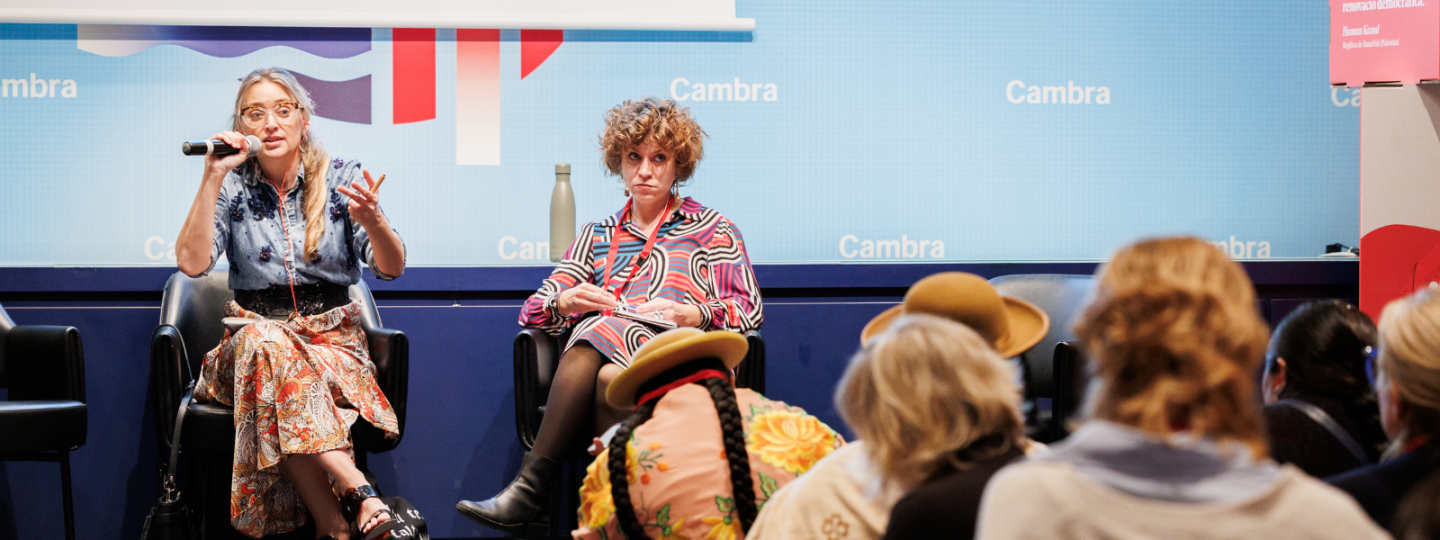
The next roundtable explored parity with a clear milestone: 2030. Contributions from Modesta Yauri, Mary Hanna Hourigan, Nadia Chadi and Ndiaya Mbow offered complementary perspectives. From Peru, Yauri emphasised the impact of community work and the need to protect women mayors from political violence. Hourigan explained how Ireland has made progress, while still struggling with symbolic and media inequality.
Chadi and Mbow, for their part, highlighted the tensions women face in contexts where local governance is still shaped by explicit patriarchal hierarchies. Beatriu Gamundí moderated a debate that balanced optimism, caution and realism. The question in the title remained open, but there was consensus: if parity is not accompanied by structural change, it will not be real—it will be a utopia.
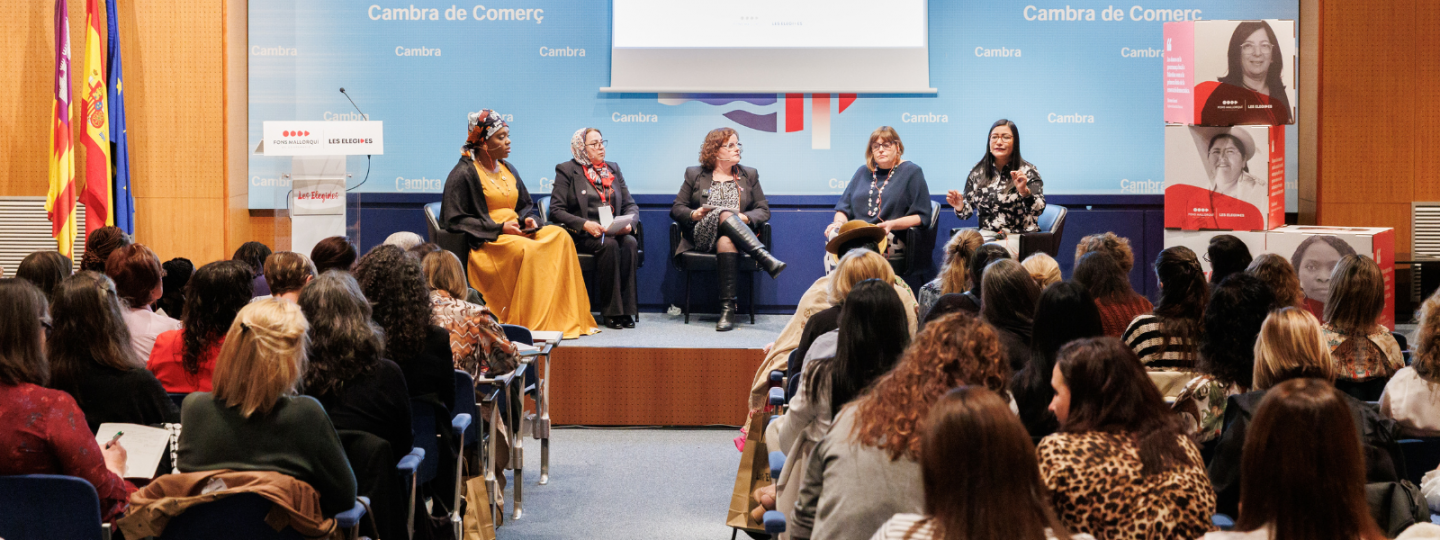
After the break, one of the most practical sessions of the meeting took place—an exchange where shared experiences were presented not only as good practices, but as directly replicable tools. Niamh Kennedy (Ireland), speaking about women’s caucuses, focused on how to institutionalise alliances among councillors as a way to shift power relations within institutions and strengthen the legitimacy of public decision-making.
In the same transformative spirit, Sara Armella Rueda (Bolivia) showed how gender-responsive budgeting has a real impact on services, infrastructure and women’s access to basic rights. From Ecuador, Litzeth Hinojosa argued for institutionalising and planning equality agendas to ensure continuity and prevent backsliding.
Rhimou Bakkali and Lluïsa Melgares, discussing women’s councils within the framework of decentralised cooperation between Morocco and Catalonia, highlighted how international cooperation can help build solid structures that provide stability and security to local policies. Finally, Zulma Inés Mamani (Bolivia) shared an experience of community-based plastic management led by women—an example of circular economy connecting ecology, autonomy and local governance.
Moderated by Carme Gomila, Third Deputy Mayor of Manacor Town Council, the discussion became a genuine space for solutions, beyond merely diagnosing the situation.
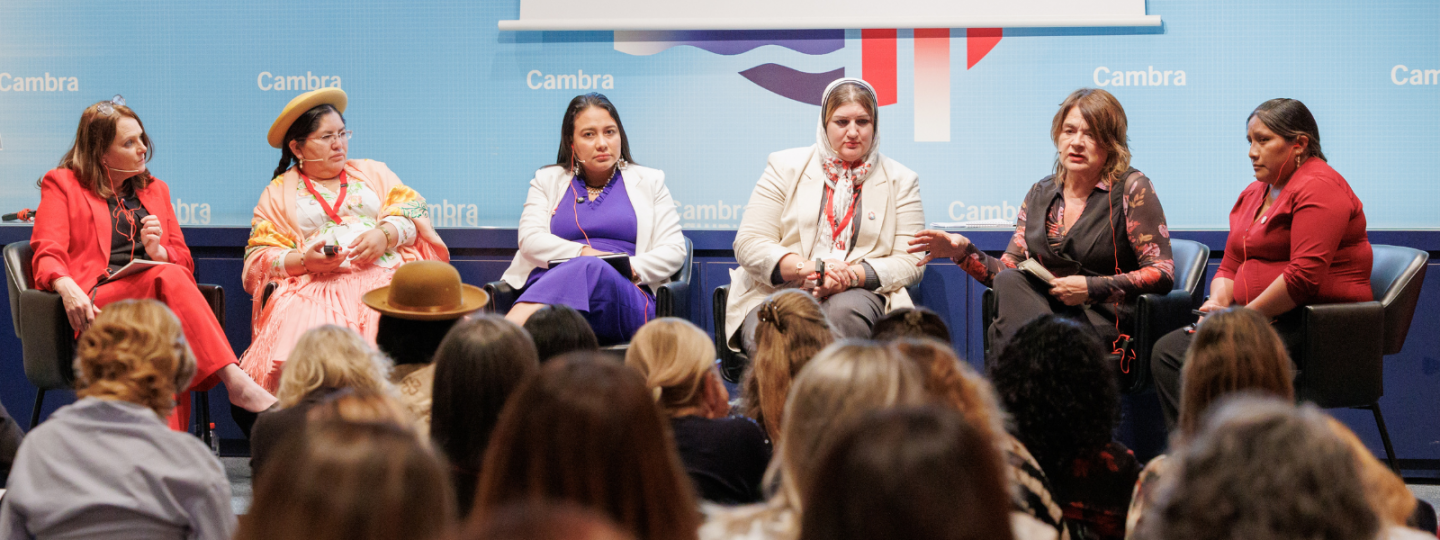
The final thematic panel, devoted to elected women and their role in transformation and peacebuilding, was especially moving. It brought together voices from contexts marked by conflict and tension and quickly became a lesson in civil resistance.
Hannan Kaoud (Palestine) stressed the importance of creating safe spaces and protecting the most vulnerable in situations of everyday violence, reflecting—based on her reality—on what “space” means. Carole Chebli Bou Chakra (Lebanon) described local development as a pathway to defend collective dignity in times of instability and to build trust among citizens.
From Northern Ireland, Alison Bennington shared key lessons from cross-border municipal cooperation as an effective peacebuilding strategy, while Léonie Kaswera (Democratic Republic of the Congo) offered a perspective on governing territories at war through a gender lens, reminding us that women often uphold governability under extremely adverse conditions. Finally, Randa Halawa (Palestine) presented education as a true frontline of resistance and as a space from which to build the future.
Moderated by Maria Antònia Serralta, Mayor of Bunyola Town Council, the panel pointed to a final idea that is often overlooked: local power is frequently the first barrier against authoritarianism and violence, and the women who sustain it are, too often, invisible yet indispensable protagonists.

Before the conclusions, participants shared challenges, alliances and future collaborations. The collective feeling was clear: the network is not an add-on—it is a necessary space for sustaining permanence. The plenary session unfolded in two main moments.
First, participants addressed the crucial task of identifying clear obstacles and urgent needs that hinder the exercise of political mandates. Then the discussion pivoted to proposals, and the premise emerged strongly: joint work and strengthening networked spaces are the most powerful line of action.
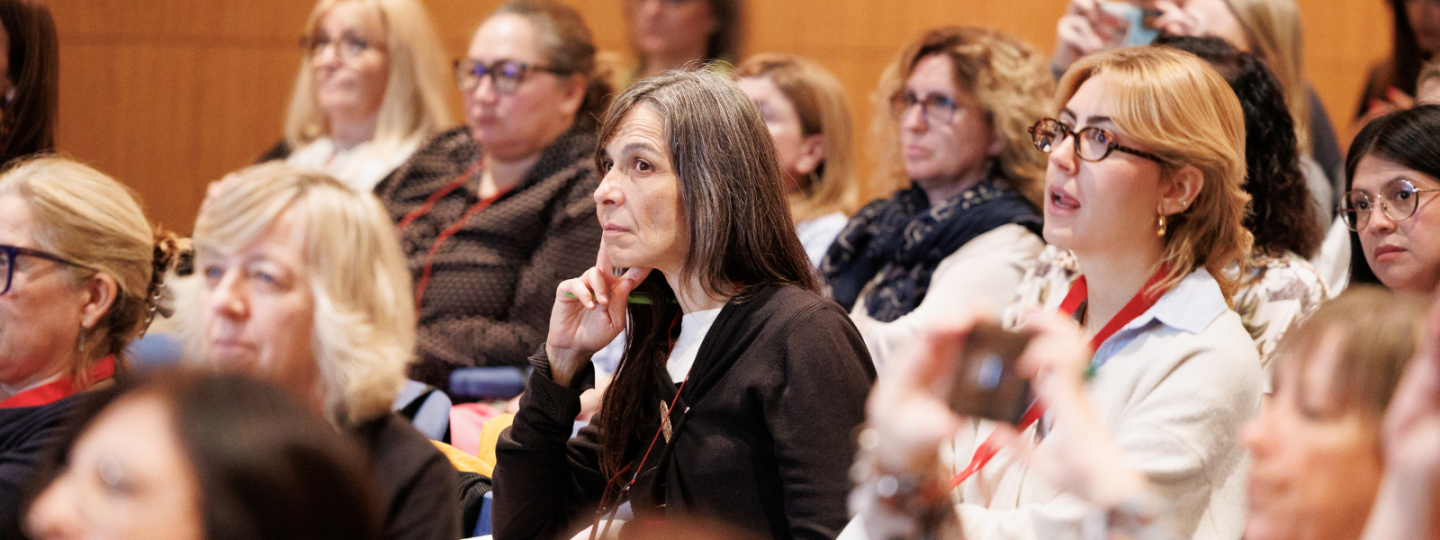
The conclusions highlighted five key ideas that ran across all sessions. First, sustaining women’s presence in decision-making spaces is today a major democratic challenge: access, while essential, is no longer enough if women cannot maintain leadership over time. In this same vein, the meeting underscored the need to recognise the hidden costs borne by women in public office—from emotional wear and tear to political violence and the overload of care responsibilities—and to incorporate this reality into public policy design.
The meeting also showed that much of the innovation in public services has a woman’s face, especially in areas linked to care, sustainability and community governance, where shared experiences demonstrate the capacity to transform structures and generate closer, more effective responses. At the same time, participants reaffirmed that political violence against women remains a global threat that undermines democratic projects and therefore demands immediate and courageous institutional responses.
Finally, the meeting strongly reinforced the idea that decentralised cooperation and international networks are key to protecting and expanding rights, especially in contexts of vulnerability or democratic backsliding. The meeting thus concluded with a message of continuity: only through shared, sustained, networked work can more equal and resilient spaces of power be guaranteed.

The 2nd International Meeting of Elected Women closed with remarks by Llorenç Perelló Rosselló, President of the Fons Mallorquí de Cooperació; Antònia Maria Estarellas, Second Vice President of the Consell de Mallorca and of the Fons Mallorquí; Xelo Angulo Luna, board member of CONFOCOS; and Llorenç Galmés Verger, President of the Consell de Mallorca. Their interventions shared a common thread: recognition of the value of this space as a meeting point between continents and as a driver of feminist cooperation capable of strengthening women’s political leadership.
All four voices emphasised the importance of continuing to move forward through networks to consolidate real equality at local and global levels. They highlighted the transformative power of elected women, the role of decentralised cooperation in defending human rights, and the need to accompany women who, around the world, sustain governance in often adverse contexts. With this momentum, Les Elegides 2025 closed an edition that reaffirms Mallorca as a transformative and egalitarian space.